
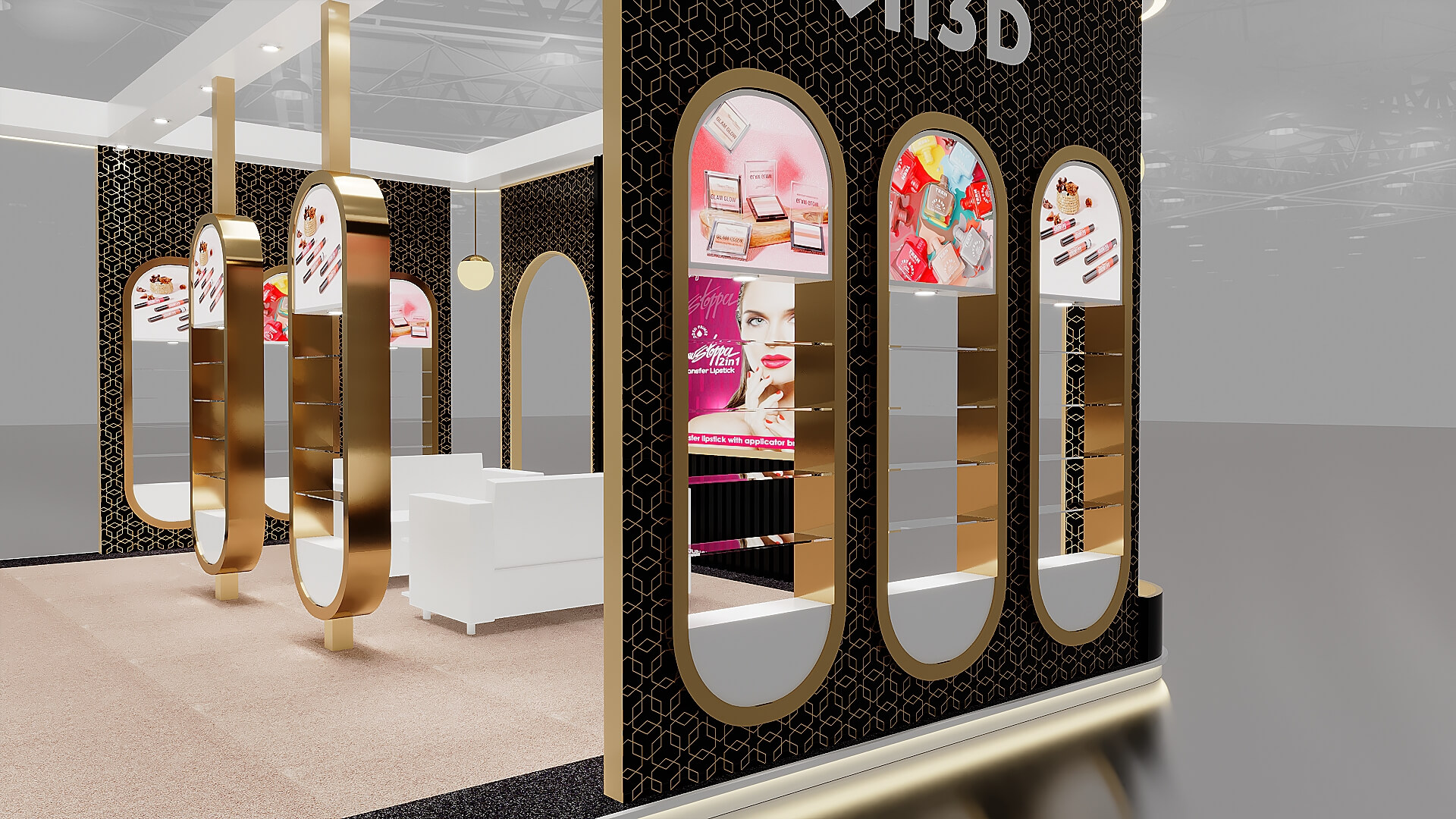
Beauty and Cosmetics Trade Show Services matters when the booth needs to translate taste, texture, sensory appeal, or personal experience into a clean environment that can still be staffed and maintained all day.
Lifestyle and sensory brands perform best when sampling, display, branding, storage, sanitation, and conversational pacing are designed around the way people naturally gather at the booth.
The team should account for replenishment, cleanliness, refrigeration or prep where needed, staffing intensity, and how the environment transitions between quick interest and more serious buying conversations.
This route works best when sensory appeal matters, but the brand still wants the booth to feel disciplined and sales-ready.
What we focus on
- Design around replenishment and cleanliness from the start.
- Give staff room to sample, explain, and close the next conversation.
- Use finishes and lighting that flatter the product honestly.
- Protect storage so the booth stays presentable.
- Plan resets for the busiest periods of the day.
Buyer expectations inside the booth
The booth needs to translate taste, texture, sensory appeal, or personal experience into a clean environment that can still be staffed and maintained all day.
Lifestyle and sensory brands perform best when sampling, display, branding, storage, sanitation, and conversational pacing are designed around the way people naturally gather at the booth.
Proof points, education, and message pacing
The team should account for replenishment, cleanliness, refrigeration or prep where needed, staffing intensity, and how the environment transitions between quick interest and more serious buying conversations.
That is why buyers should lock the key dates, required approvals, and vendor responsibilities while the layout is still moveable. If the route points toward SAHARA Las Vegas or a neighboring workload inside Las Vegas Strip, those commitments need even more clarity because the venue and organizer clocks keep moving whether the exhibitor is ready or not.
- Design around replenishment and cleanliness from the start.
- Give staff room to sample, explain, and close the next conversation.
- Use finishes and lighting that flatter the product honestly.
- Protect storage so the booth stays presentable.
Samples, demos, and staffing coverage
The team should account for replenishment, cleanliness, refrigeration or prep where needed, staffing intensity, and how the environment transitions between quick interest and more serious buying conversations.
Freight planning gets cleaner when the team already knows what has to arrive first, what can be staged later, and who will answer questions on the floor. Meeting Room Environment Design often becomes part of that conversation because vendor sequencing matters just as much as the creative direction.
Graphics review, compliance care, and technical detail
Lighting, surfaces, graphics, mirrors, screens, or product displays need to flatter the offering while staying practical to maintain under heavy traffic.
The audience will experience the result as one environment, so the technical work has to feel coordinated with the storyline, the staffing plan, and the traffic pattern. When those elements are reviewed together, the booth or event reads cleaner and the field team has fewer surprises to absorb.
Show-site rhythm under live traffic
During open hours, success depends on neat resets, clear product presentation, and staff who can move people through the booth without making the experience feel rushed.
A controlled live week protects more than opening day.
Closeout, reuse, and follow-up continuity
Post-show planning should protect consumables, product displays, fixtures, and the pieces that can be refreshed for the next activation without starting over.
Closing cleanly also helps the next event.
- Protect storage so the booth stays presentable.
- Plan resets for the busiest periods of the day.
- Carry forward fixtures and display learnings that still work.
Why this industry needs a different approach
This route works best when sensory appeal matters, but the brand still wants the booth to feel disciplined and sales-ready.
It can still support smaller programs, but the logic should be the same: solve the real operating problem, not simply the obvious visual one. Buyers get better results when the route is selected for workload, timing, and ownership as much as for appearance.
What buyers remember after the show
Visitors feel invited in, the products are easy to understand, and the team can keep the space fresh through the full run of the show.
That is the standard to hold the services against in Las Vegas: cleaner decisions before move-in, steadier execution during open hours, and a closeout that leaves the exhibitor better positioned for whatever comes next.
Frequently asked questions
How early should Beauty and Cosmetics Trade Show Services be scoped?
The team should account for replenishment, cleanliness, refrigeration or prep where needed, staffing intensity, and how the environment transitions between quick interest and more serious buying conversations.
Can this work be paired with work at SAHARA Las Vegas?
Yes, and that pairing is usually where the route proves its value. The key is to align the scope with the property rules, dock sequence, and show-week rhythm of SAHARA Las Vegas before suppliers start moving independently.
What usually drives timing and cost the most?
Lifestyle and sensory brands perform best when sampling, display, branding, storage, sanitation, and conversational pacing are designed around the way people naturally gather at the booth.
Who should own show-site decisions?
During open hours, success depends on neat resets, clear product presentation, and staff who can move people through the booth without making the experience feel rushed.
What should be settled before move-in begins?
Lighting, surfaces, graphics, mirrors, screens, or product displays need to flatter the offering while staying practical to maintain under heavy traffic.